Analytics Behind Recurring Incentives in Mobile Game Ecosystems
Avery Schwarz · Aug 19, 2026

Analytics Behind Recurring Incentives in Mobile Game Ecosystems
Data collection forms the foundation of many mobile gaming reward systems where developers monitor session length, spending patterns, and interaction frequency to adjust bonus availability in real time. Researchers at various institutions have documented how these systems operate through algorithms that segment players into groups based on engagement metrics, allowing operators to time offers that align with predicted return visits. According to reports from the Entertainment Software Association, mobile titles generated substantial revenue in recent years through such mechanisms that blend free progression with optional purchases.
Core Components of Behavioral Tracking
Developers deploy tools that log every tap, swipe, and pause during gameplay, creating detailed profiles that update continuously across devices and sessions. These profiles incorporate variables such as time of day preferences, level completion rates, and responses to previous promotions, which feed into decision trees that determine when and what type of bonus appears next. Studies from academic sources in Canada have shown that such granular data enables sequences where initial small rewards lead into larger incentives if players maintain consistent activity over several days.
One developer implemented a system that adjusts daily login bonuses based on a player's historical churn risk, calculated from metrics like declining session times and reduced social feature use. The approach relies on machine learning models trained on aggregated anonymized data sets rather than individual identities, a distinction emphasized in industry guidelines from organizations in the European Union. Players often encounter these bonuses through in-app notifications timed to coincide with typical login windows identified in the tracking data.
Mechanics of Recurring Bonus Sequences
Bonus sequences typically follow a pattern where early rewards require minimal effort to build momentum, followed by escalating conditions that encourage further investment of time or resources. Data indicates these progressions incorporate elements like streak multipliers and personalized challenges derived from past performance, creating loops where completion of one cycle unlocks parameters for the next. Figures from market analysis firms reveal that titles employing this structure retain higher percentages of users beyond the first week compared to those using static reward schedules.
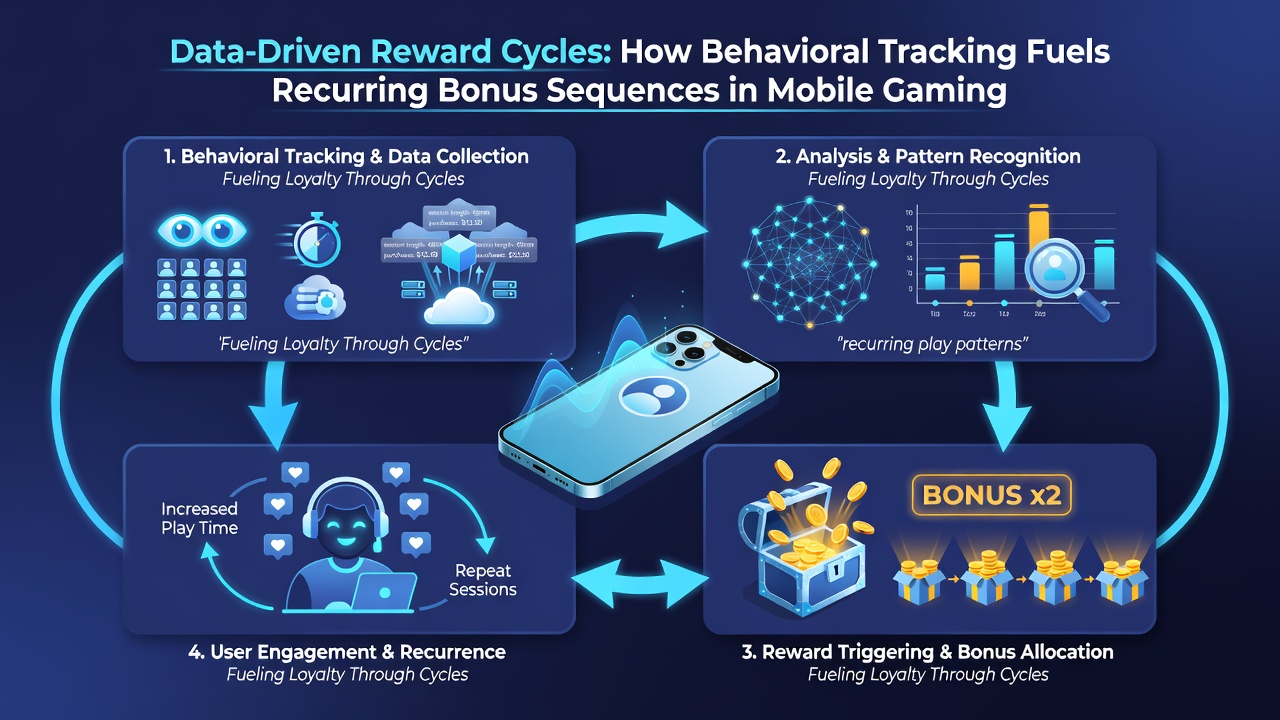
What's interesting is how the system recalibrates after each player action, using real-time inputs to shift bonus values or introduce new sequences mid-session. For instance, if tracking shows a player has completed several levels without making a purchase, the algorithm may surface a limited-time offer tied to the next milestone. Australian regulatory bodies have examined similar practices in digital entertainment, noting requirements for clear disclosure of how participation data influences these offers.
Integration with Broader Game Design
Behavioral tracking extends beyond rewards to influence level difficulty curves, character customization options, and social features that amplify engagement. Data shows teams often correlate bonus uptake with progression speed to refine difficulty spikes, ensuring players receive assistance precisely when abandonment rates historically rise. Those who've analyzed large data sets from multiple titles observe that recurring sequences perform best when synchronized with narrative events or seasonal updates already planned in the development roadmap.
Yet the process demands constant iteration because player responses evolve over months of exposure to the same mechanics. A case documented in university research papers involved a studio that modified its tracking parameters after observing shifts in regional play habits during holiday periods, resulting in adjusted bonus timing that maintained sequence continuity across time zones.
Regulatory and Technical Considerations
Technical infrastructure supporting these cycles includes cloud-based analytics platforms that process millions of data points daily while complying with privacy standards across jurisdictions. Reports from organizations in the United States highlight ongoing discussions about transparency in how behavioral data translates into personalized incentives, particularly when sequences involve randomized elements. Developers address this through opt-in features and aggregated reporting that avoids exposing individual profiles.
Implementation often requires balancing computational costs of real-time analysis against the benefits of higher retention, a trade-off quantified in industry white papers from research institutions. Players encounter the outcomes through interfaces that present bonuses as natural extensions of gameplay rather than direct products of tracking, though the underlying logic remains consistent across many successful titles.
Conclusion
Behavioral tracking continues to underpin recurring bonus sequences by converting raw interaction data into adaptive reward structures that evolve with player habits. Evidence from multiple regions demonstrates measurable effects on session frequency and progression rates when these systems operate within established design and compliance frameworks. As mobile gaming expands, the interplay between data inputs and incentive outputs remains a central element in how developers sustain long-term engagement across diverse player bases.