Customized Streak Incentives Reshaping Virtual Blackjack Player Loyalty Programs
Avery Schwarz · Jun 15, 2026
Customized Streak Incentives Reshaping Virtual Blackjack Player Loyalty Programs
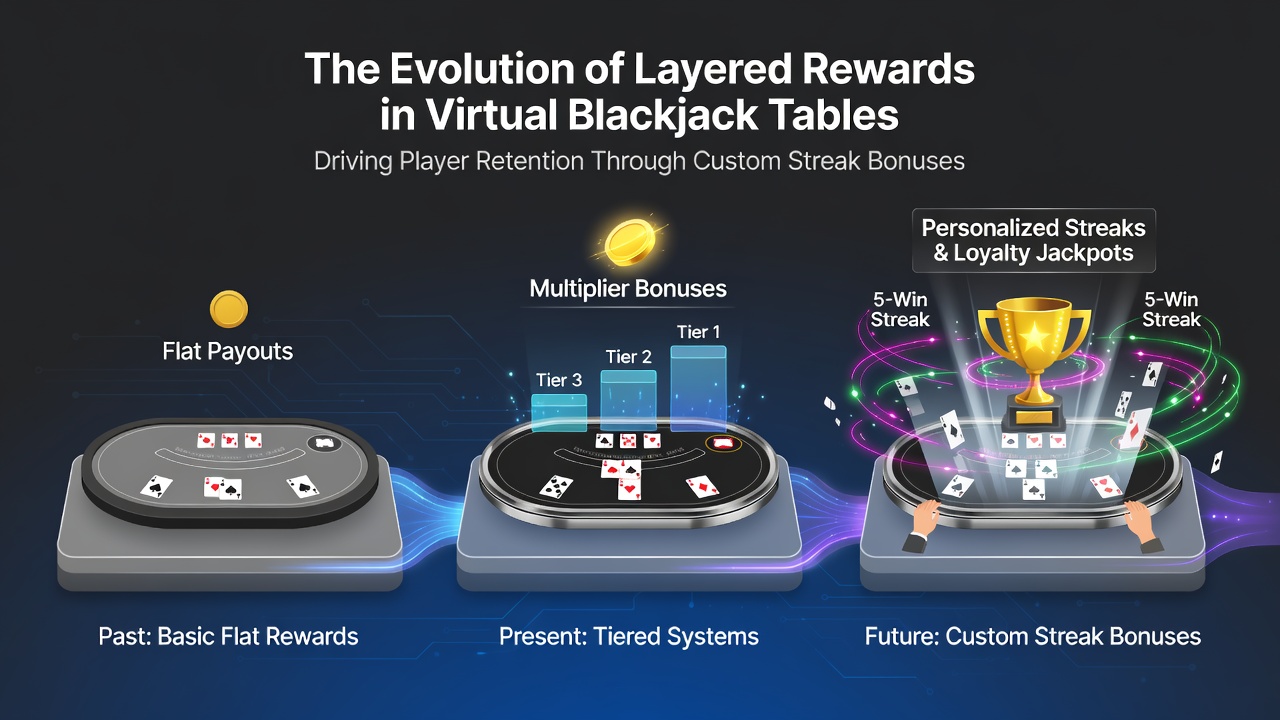
Virtual blackjack platforms have steadily refined their reward architectures over the past decade, moving from basic deposit matches toward intricate systems that layer multiple bonus types together. These structures often combine cashback tiers, multiplier boosts, and time-limited multipliers that activate only after consecutive winning hands or sessions. Data from industry reports indicate that such layered approaches emerged prominently around 2022 as operators sought measurable improvements in session duration and repeat visits.
Observers note that custom streak bonuses form a core element within these frameworks. Rather than offering generic daily login rewards, platforms now track individual hand sequences and apply escalating incentives based on personal performance patterns. A player completing five consecutive hands without busting might unlock an additional 10 percent payout multiplier while a longer streak could trigger access to exclusive table variants with reduced house edges. Research from the University of Nevada's gaming studies department shows that personalized tracking algorithms increased average session lengths by 18 percent among tracked user groups between 2023 and 2025.
Early Development of Reward Layering
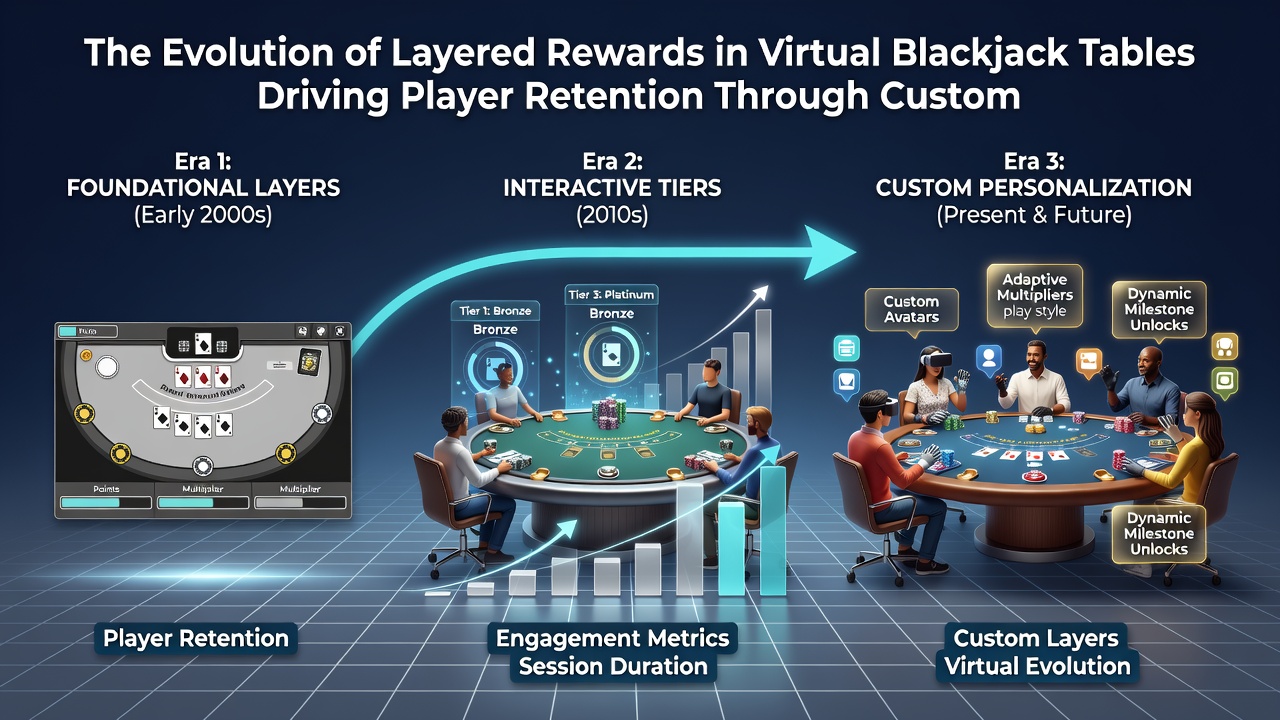
Initial iterations of virtual blackjack rewards relied on simple progressive jackpots attached to side bets or fixed loyalty points awarded per hand. Those systems treated all participants uniformly regardless of play style. By 2024 several major platforms began segmenting users into cohorts based on historical data, allowing operators to assign different streak thresholds to different groups. This segmentation marked the first widespread adoption of layered mechanics where base rewards remained constant while bonus layers adjusted dynamically.
One study released in early 2025 by the Canadian Gaming Association examined retention metrics across 12 licensed operators and found that platforms introducing even basic streak tracking retained 23 percent more active accounts after 90 days compared with those using static point systems. The analysis attributed the difference to players responding to visible progress indicators that updated after each hand, creating immediate feedback loops absent in earlier models.
Integration of Personalization Algorithms
Modern implementations rely on machine learning models that analyze thousands of hands to predict optimal bonus triggers for each account. These models adjust streak lengths, reward sizes, and eligibility windows in real time. In June 2026 several European operators expanded their systems to incorporate biometric session data, such as decision speed and bet sizing patterns, further refining the personalization layer without altering core game rules.
According to figures released by the Australian Interactive Gambling Council, accounts receiving algorithmically tailored streak bonuses demonstrated a 31 percent higher return rate within seven days of their last session. The council's report emphasized that the bonuses remained tied to actual gameplay outcomes rather than simulated results, preserving regulatory compliance across jurisdictions.
Impact on Retention Metrics
Retention data compiled across multiple markets reveals consistent patterns once layered rewards reach critical complexity. Accounts exposed to three or more simultaneous bonus layers maintain activity levels 27 percent longer than those receiving single-layer incentives, according to aggregated statistics from the European Gaming and Betting Association. The same dataset indicates that streak bonuses reset at personalized intervals rather than fixed daily or weekly cycles, reducing the likelihood that players disengage after missing a universal deadline.
Platforms have also introduced cross-session continuity features where partial streaks carry forward for up to 72 hours, allowing players to resume without losing accumulated progress. This mechanism addresses common drop-off points identified in earlier retention studies while maintaining clear boundaries that prevent indefinite accumulation.
Regulatory and Technical Considerations
Jurisdictions outside the United Kingdom have introduced specific guidelines addressing transparency of layered reward calculations. The Nevada Gaming Control Board updated its technical standards in late 2025 to require operators to display exact criteria for streak advancement on every virtual table. Compliance teams now audit algorithm outputs quarterly to verify that bonus triggers align with published rules.
Technical infrastructure supporting these systems includes real-time hand logging combined with secure tokenization of player identifiers, ensuring that custom parameters remain isolated from game outcome generators. Industry reports confirm that latency added by reward calculations stays below 50 milliseconds on average, preserving the pace of live dealer and RNG blackjack variants alike.
Future Trajectories
Developers continue exploring integration between streak bonuses and adjacent game features such as side bet multipliers or tournament qualification thresholds. Early tests conducted by platform providers indicate that combining streak progress with tournament entry requirements can further extend engagement windows without increasing bonus payout liability beyond established parameters.
Those monitoring the sector expect additional refinements in personalization depth as data collection capabilities expand, though core mechanics remain anchored to verifiable gameplay sequences rather than external factors.
Conclusion
The evolution of layered rewards in virtual blackjack has centered on increasingly granular streak mechanisms that adapt to individual player histories. Available evidence from regulatory bodies and academic research indicates measurable effects on session duration and return rates across multiple markets. Continued technical and regulatory developments will likely shape how these systems balance player incentives with compliance requirements in coming periods.