Emerging Cross-Platform Trends Driving Reward Redemption in Virtual Table Settings
Avery Schwarz · Jul 20, 2026
Emerging Cross-Platform Trends Driving Reward Redemption in Virtual Table Settings
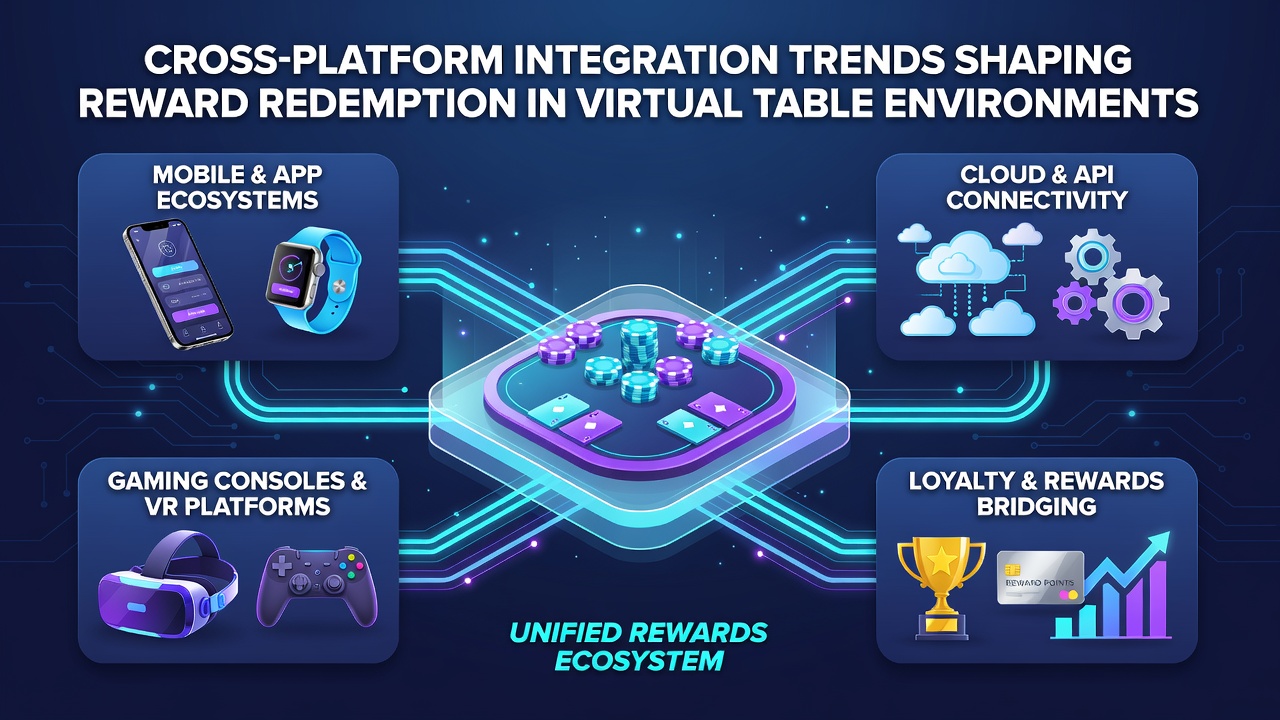
Virtual table environments continue to evolve as operators integrate systems that allow players to move rewards seamlessly between devices and game formats. Data from industry reports indicate that unified player accounts now handle redemption across live dealer tables, mobile apps, and emerging VR platforms without requiring separate logins or balance transfers.
Developers have focused on API frameworks that connect loyalty programs directly to table game outcomes, so points earned during a blackjack session on desktop appear instantly for redemption on a tablet or VR headset. According to the American Gaming Association, these connections reduce friction in reward access and support consistent engagement metrics across platforms.
Unified Wallets and Real-Time Syncing
Operators deploy centralized wallet solutions that track both monetary balances and loyalty points in one location, eliminating the delays that once occurred when players switched from desktop roulette to mobile blackjack. Synchronization occurs through secure APIs that update within seconds of each hand or spin, allowing immediate redemption options such as bonus credits or tournament entries.
Research conducted by university gaming labs shows that platforms with real-time syncing report higher session continuity rates, because players do not lose progress when changing devices mid-session. These systems also log redemption history across all access points, creating detailed records for compliance teams without manual reconciliation.
API Standardization Across Providers
Multiple software vendors have adopted common API standards for virtual table environments, enabling reward data to flow between different game suppliers. A player who accumulates points at one provider's live dealer tables can redeem those points through another provider's mobile application when the underlying integration is active.
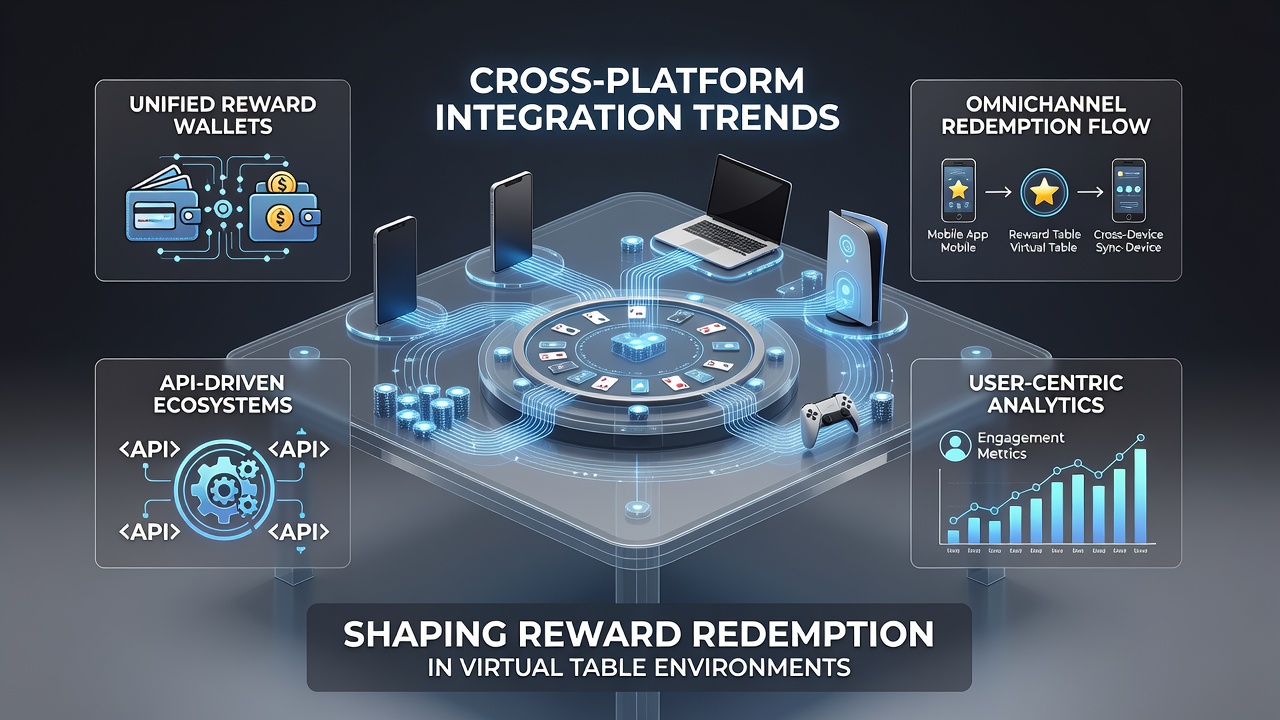
Industry observers note that this standardization accelerated during the first half of 2026, with several major platforms completing integration projects that previously required custom coding for each partner. The result appears in faster rollout of new redemption features, such as instant cashback applied directly to table game stakes.
Blockchain Elements in Reward Tracking
Some operators now embed blockchain ledgers into their cross-platform systems to create immutable records of point accumulation and redemption. Each transaction at a virtual table receives a timestamp and identifier that remains consistent whether the player accesses the environment through a browser, native app, or VR interface.
Figures released by the Canadian Centre for Gaming Research indicate growing adoption of these ledgers among platforms serving multiple jurisdictions, because the transparent audit trail simplifies reporting requirements. Redemption events become verifiable events on the chain, reducing disputes over point balances during platform migrations.
Personalization Through Shared Data
Cross-platform integrations feed player behavior data into centralized analytics engines that adjust reward offers in real time. A sequence of wins at virtual baccarat tables on one device can trigger tailored redemption incentives on another device within the same ecosystem, based on historical patterns.
July 2026 saw several platforms launch enhanced personalization modules that combine table game data with broader activity logs, allowing operators to present redemption choices aligned with individual play styles rather than generic promotions. These modules operate within existing regulatory frameworks in multiple regions outside the UK.
Device-Agnostic Redemption Interfaces
Redemption portals now function consistently across screen sizes and input methods, so the process of converting points into playable credits or physical prizes remains identical whether initiated from a desktop monitor, smartphone, or VR controller. Touch, voice, and gesture controls all access the same backend functions.
Testing data shared by European gaming associations reveal that consistent interfaces reduce support ticket volume related to reward access, because players encounter fewer navigation differences when moving between environments. Operators continue to refine these interfaces based on usage statistics gathered from live table sessions.
Conclusion
Cross-platform integration continues to shape how rewards move through virtual table environments by connecting wallets, standardizing data exchange, and enabling consistent redemption across devices. The developments documented through 2026 demonstrate measurable improvements in transaction speed and record accuracy, driven by technical standards adopted across the sector.