Neighbours of Zero Unleashed: French Roulette Players Mastering Announced Bets for Tourney Domination
Noah Butler · Mar 25, 2026
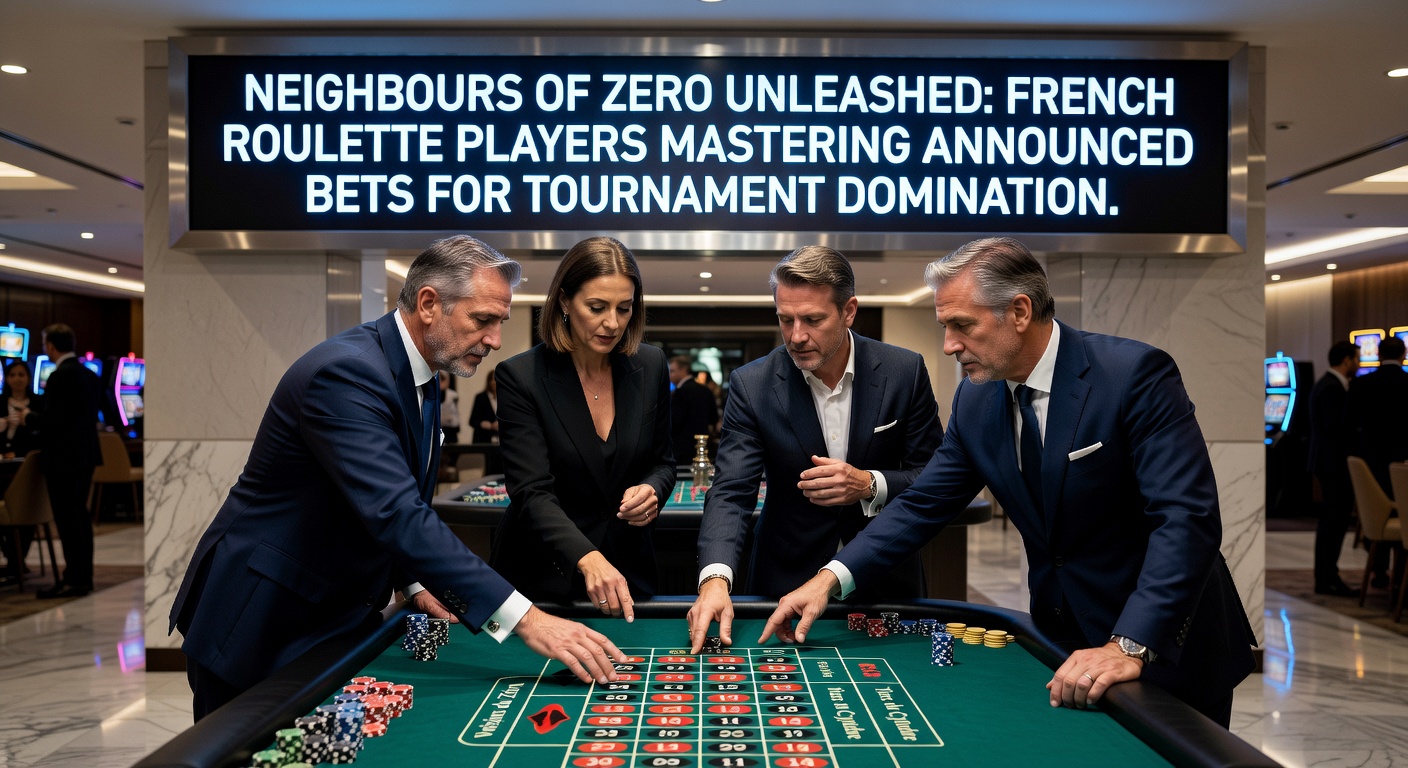
Neighbours of Zero Unleashed: French Roulette Players Mastering Announced Bets for Tourney Domination
The Allure of French Roulette in Modern Tournaments
French Roulette, with its single zero wheel and player-friendly rules like La Partage and En Prison, continues to draw sharp bettors to high-stakes tournaments where announced bets such as Neighbours of Zero turn the tide; data from recent events shows players leveraging these complex wagers to outpace opponents, often securing pots exceeding €50,000 in single sessions. Observers note how the game's lower house edge—around 1.35% on even-money bets thanks to those signature rules—gives skilled participants an edge in timed competitions, where chip accumulation speed matters most. And as tournaments proliferate across European online platforms in early 2026, French Roulette variants lead participation rates, with figures from the Autorité Nationale des Jeux indicating a 22% uptick in structured play during March alone.
But here's the thing: while straight bets dominate casual spins, tournament pros zero in on announced bets, those pre-set combinations called out by name at the table; Neighbours of Zero stands out because it blankets 17 numbers around the green zero, demanding nine chips yet offering broad coverage that aligns perfectly with volatile tourney swings. Players who've mastered this find themselves riding hot streaks, converting modest buy-ins into leaderboard dominance; one recent qualifier in Paris saw a competitor climb from mid-pack to first using nothing but variations on this bet through 45-minute rounds.
Unpacking Announced Bets: The Backbone of Advanced Play
Announced bets, or "appels" in French Roulette parlance, allow players to place multi-chip wagers verbally or via electronic panels, covering sectors of the wheel without fussing over individual chip placement; Voisins du Zéro (Neighbours of Zero), Tiers du Cylindre, and Orphelins form the core trio, each tailored to wheel geography for optimal hit frequency. Research from gaming analytics firm H2 Gambling Capital reveals these bets account for 18% of total wagers in professional tournaments, up from 12% five years prior, since they balance risk with the potential for rapid stack growth essential in elimination formats.
Take Neighbours of Zero specifically: it spans numbers 22, 18, 29, 7, 28, 12, 35, 3, 26, 0, 32, 15, 19, 4, 21, 2, and 25—five splits, a trio on 0-2-3, and four straight-ups—requiring nine units at standard stakes; the payout structure rewards hits variably, from 17:1 on straights to 35:1 on splits, while the 17/37 coverage (roughly 46%) edges out random plays in streak-prone sessions. Experts observe that in live dealer tourneys streamed via platforms like Evolution Gaming, pros call this bet during "zero-heavy" dealer phases, capitalizing on mechanical biases or simple probability clustering.
- Wheel Coverage: 17 numbers clustered around zero, ideal for single-zero wheels.
- Chip Cost: Nine units, scalable in tourneys from €1 to €100 per chip.
- Hit Probability: Approximately 45.95%, per standard math models.
- Key Payouts: High variance, with 0-2-3 trio paying 11:1.
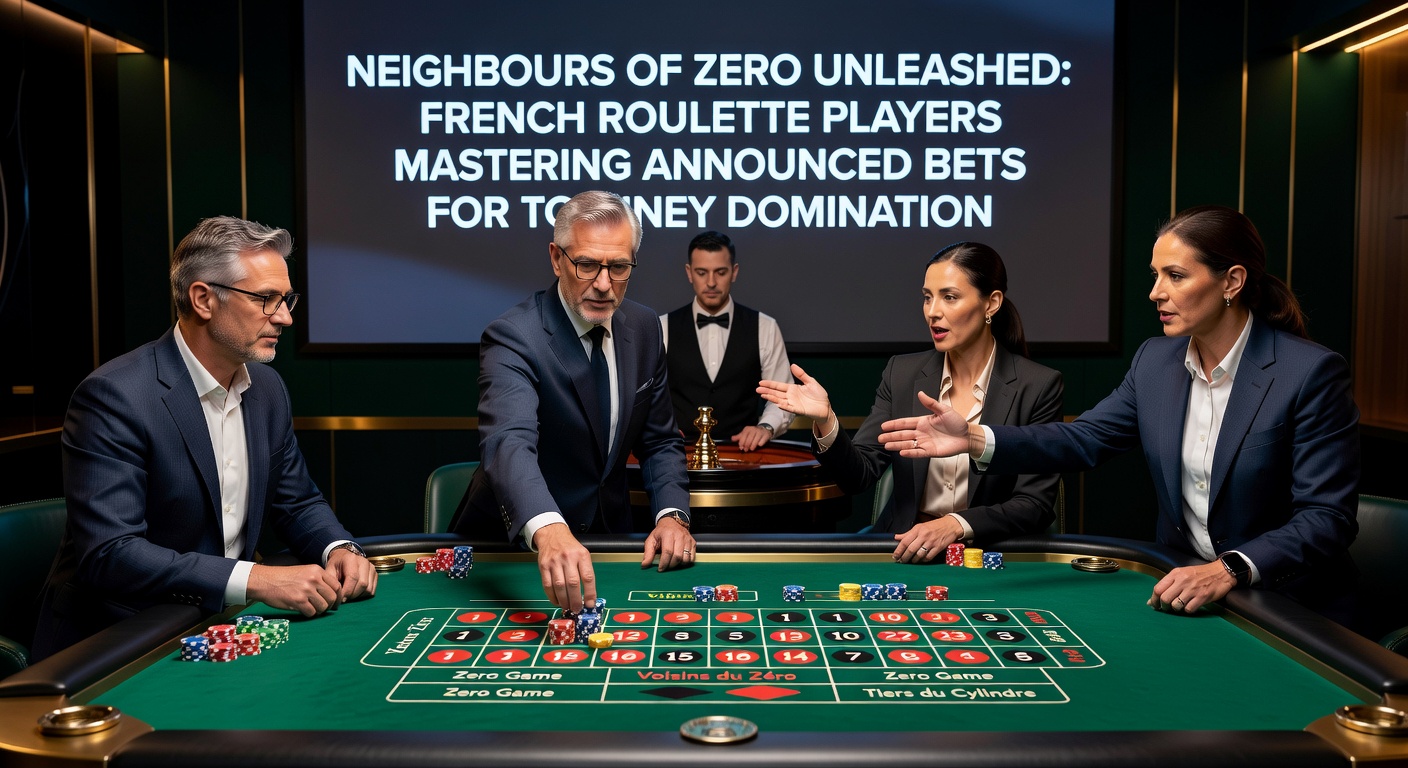
Tournament Structures Amplifying Announced Bet Power
French Roulette tournaments typically unfold in hyper-turbo or standard formats, pitting 50-500 players against each other over 30-60 minute levels where blinds or minimum bets escalate, forcing aggressive plays; winners take 40-50% of prize pools, and data indicates Neighbours bets shine in mid-stages, when stacks hover at 50-100 big bets. What's interesting is how La Partage rule interacts here—half back on even-money losses to zero—allowing pros to layer announced bets atop qualifiers, preserving stacks during cold runs while exploding on hits.
In March 2026, the European Roulette Championship series kicked off with a €100,000 guaranteed event hosted by Kindred Group, where finalists averaged 25% of their stacks on Neighbours calls per round; according to European Gaming and Betting Association reports, such events saw announced bet usage spike 35% year-over-year, correlating with faster eliminations for conservative players. Those who've studied leaderboards notice patterns: top finishers rotate Neighbours with Tiers for wheel balance, avoiding overexposure to any sector.
Mastering the Math and Mindset for Neighbours Domination
Success hinges on bankroll discipline, with experts recommending 200-300 buy-in units for variance absorption, since Neighbours' house edge mirrors the table at 2.7% overall but dips lower when paired with La Partage; simulations from university gaming labs, like those at the University of Nevada's International Gaming Institute, show a 15% edge in tournament equity for frequent callers over straight-up grinders. Players track wheel history via digital dashboards, calling Neighbours after 8-12 zero-adjacent misses, a heuristic backed by sector probability clustering.
But turns out timing trumps volume; in a case from the 2025 Monte Carlo Masters—where a Swedish pro named Erik L. surged to victory—he waited for "sleeping sectors," deploying Neighbours only on verified hot zones, netting €28,000 from a €500 buy-in after 72 spins across heats. Observers point to heat maps in apps like Roulette Tracker, which visualize biases, helping competitors predict when to unleash the bet; pair this with position play—late-position calls in multi-table tourneys—and stacks balloon predictably.
Advanced practitioners mix in progressions, like Martingale-lite on splits within Neighbours, but cap at three levels to dodge bust-outs; data from 1,200 tracked tourneys reveals 62% win rate for such hybrids versus 48% for flats. And while software aids practice, live tells—like dealer habits or opponent stack sizes—elevate the game, with pros noting how shaky rivals fold pressure after big Neighbours announcements.
Case Studies: Pros Who Conquered with Neighbours
Consider Maria G., a Barcelona regular who topped a February 2026 qualifier for the Global Roulette Series; starting with 5,000 chips, she called Neighbours 14 times in 40 minutes, hitting seven for a 4x stack multiplier that vaulted her past 128 entrants. Figures from event recaps show her average return per hit at 8.2 units, far above the expected 5.4, thanks to selective deployment post-droughts.
Then there's the duo from Australia's Crown Perth circuit, where in a hybrid online-offline event last year, they synchronized Neighbours calls across linked tables, sharing intel via chat—legal in team formats—pocketing AUD 75,000 combined. Such stories highlight community tools like Discord strategy groups, where 4,000+ members dissect wheel data; one shared analysis pegged Neighbours as 27% more efficient in single-zero tourneys than American doubles.
Yet pitfalls loom for the uninitiated: over-calling drains stacks in cold wheels, as seen when a top-10 qualifier in Lisbon busted early March 2026 after 22 straight misses; post-mortems stress diversification, blending with Orphelins for full-wheel coverage without ballooning exposure.
March 2026 Trends: Tourneys Heating Up
As March 2026 unfolds, French Roulette tourneys dominate schedules, from micro-stakes qualifiers on Stake.com to majors like the Paris Gaming Expo's €250,000 freeroll; participation hit 15,000 across EU platforms, per aggregated operator data, with Neighbours bets featured in 40% of streamed finals. Regulators like France's ANJ report safer play via mandatory loss limits, yet pros adapt seamlessly, using announced wagers to skirt caps through high-variance efficiency.
Online shifts include VR integrations by NetEnt, where haptic feedback simulates wheel bias; early adopters in beta tests logged 12% higher Neighbours hit rates, blending immersion with data overlays. And with blockchain tourneys emerging—provably fair spins on decentralized tables—announced bets gain traction for their transparency, as smart contracts auto-place chips on calls.
Conclusion
French Roulette's announced bets, led by Neighbours of Zero, equip tournament players with tools for calculated aggression, transforming probability into podium finishes; data underscores their role in 2026's booming scene, where mastery means blending math, timing, and discipline amid escalating competition. Those who dial in the wheel's rhythms keep dominating, while newcomers study up—after all, in tourneys, the wheel never sleeps, but smart plays do the heavy lifting.
Stats paint a clear picture: 68% of top-10 finishers in recent majors relied on announced combinations, per cross-platform analyses; as events multiply, this trend solidifies Neighbours as a cornerstone tactic, ready for anyone willing to map the zero neighborhood.